
What makes a home suitable for aging in place? Functionality and a focus on accessibility are priorities for aging in place, but does that mean that you have to sacrifice design and decor features? The key to creating a safe and beautiful home that lets you age in place without skimping on style is to apply principles of universal design (UD).
What is Universal Design?
Scott Pruett, co-founder of the UD Project, an advisory group with expertise in accessible and inclusive home design, defines universal design as, “design that’s as functional as possible for as many people as possible.”
Universal design isn’t solely for seniors and aging in place but is about transforming a space through the lens of accessibility.
Universal design is based on seven principles, where the built environment is equitable, flexible, intuitive, perceptible, safe, comfortable and appropriately sized. Design choices create spaces that are usable, safe, comfortable and accessible for all, regardless of age, physical or cognitive disability or ability.
Examples of how these principles translate into design features include single-level living, wide doorways, an open-concept floor plan, and accessible entry and exit to the home.
It’s possible to incorporate universal design features to support accessibility and inclusiveness, but for homeowners who might want a fully accessible home, Pruett recommends looking at home design holistically, rather than on a feature-by-feature basis.
“We’d suggest a shift in perspective where people look at the entire home as a single product that’s either universally accessible or not. There’s a big difference between a universally designed home and a home with some universal design features,” says Pruett.
Want to Age in Place? New Build Homes Offer Specific Benefits
Building a home brand new and incorporating universal design features is easier done at the construction phase, rather than retrofitting an existing home, which can be more challenging and costly.
“A lot of the design elements that you do for universal design require planning ahead,” says Kendal Cavalieri, founder and principal designer of Kendal Cavalieri Design.
“Let’s say in the future you might want grab bars or a bench seat in your shower, you need to put blocking behind the wall,” which is easier to do during the construction phase of a home, she explains.
And for homeowners who are keen to adopt universal design throughout their homes, the best option is to build new, as supply of fully accessible homes is lacking currently in the United States, something Pruett and the UD Project hope to change with community education and in an advisory capacity.
“The prevalence of existing UD homes is less than 0.15 percent, nationally,” says Pruett. So, it might be challenging to find an existing home, in your preferred location, that lends itself comprehensively.
Housing styles that feature one-level living in a cottage style home or a ranch style home, are easiest for aging in place, but that’s not to say that you can’t age in place in a home with multiple floors.
Ideally, you would have a full bathroom on the main floor, along with a flex room that could serve as a primary bedroom, if you were no longer able to navigate the stairs.
Think about installing an elevator or design your home in such a way that you could install one easily down the road. One approach homeowners take is to design closet space so they are stacked one on top of the other on each floor, which could turn into an elevator shaft without moving walls.
What Design and Decor Features Support Universal Design and Accessibility?
Homeowners may be surprised to learn that some of the most coveted current décor trends also support the principles of universal design.
Open-Concept Floor Plan
Open concept is the most popular layout for homeowners currently, but it is also the most conducive for aging in place. Wide sightlines, no corners to navigate and lots of natural light combine to make this floor plan accessible.
Color Contrast
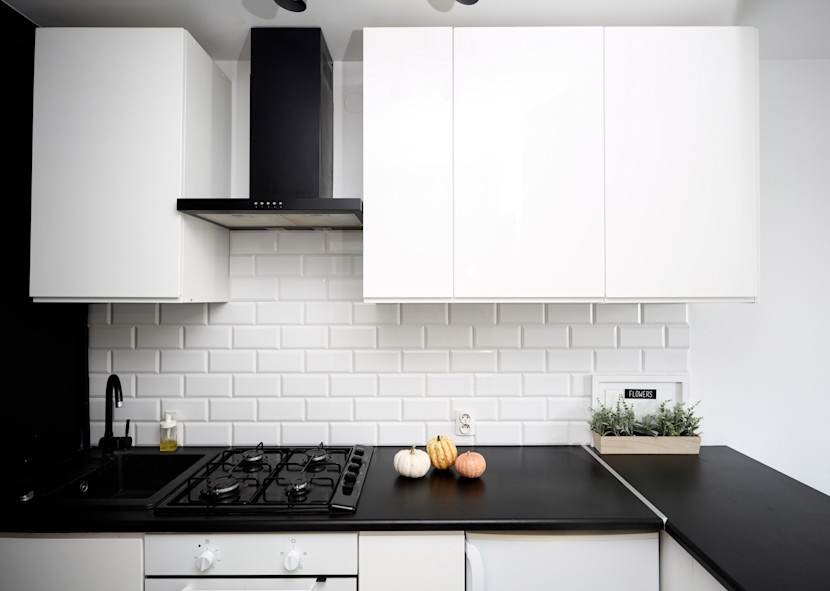
Contrasting colors can help guide the eye, especially if sight is diminished.
For example, the contrast in a classic black-and-white color palette not only looks stylish, but it can also help distinguish spaces and surfaces, enhancing visual perception.
“White cabinets with a black countertop are helpful in universal design. And people choose this color scheme because they like the design qualities, and not with the intent of it being for universal design,” says Cavalieri, suggesting that style and accessibility can co-exist.
Smart Home Features
Smart home features simplify household item use, a key component of universal design, says Cavalieri.
“It is beneficial for someone who is disabled or has mobility issues to ask Alexa to change the temperature, rather than having to reach a thermostat. With a smart oven, you can pre-heat from your phone, and so on,” she says. Having the power to control everything from blinds to alarm systems to water temperature right from your phone is immensely helpful.
Floor-to-Ceiling or Oversize Windows
Large windows are an important design feature of fusing an indoor/outdoor connection, which is on trend. They also usher in tons of natural light, which makes it easier to see indoors.
For maximum light flow, and style, leave windows bare, or treatments to a minimum.
Luxe Upgrades that also Boost Accessibility
According to Cavalieri, some design choices that are viewed as luxe upgrades also promote universal design, adding both financial and functional value to a home.
Grab bars are a necessity for safety in the bathroom under universal design but can look clinical. Well-known brands such as Koehler and Moen now feature grab bars with high-end finishes and profiles that add to the overall aesthetic.
Specially designed toilet paper holders and soap dishes discreetly offer a grab bar function, but with a stylish twist.
In the shower stall, a handheld shower on a slide bar is sleek and extends the shower’s functionality for people of various physical abilities.
Wide-plank luxury vinyl flooring is an excellent choice for universal design, for its smooth finish. It’s on trend to extend flooring cohesively throughout an open floor plan, which also helps with safety and accessibility, where flat flooring and minimal transitions are preferred.
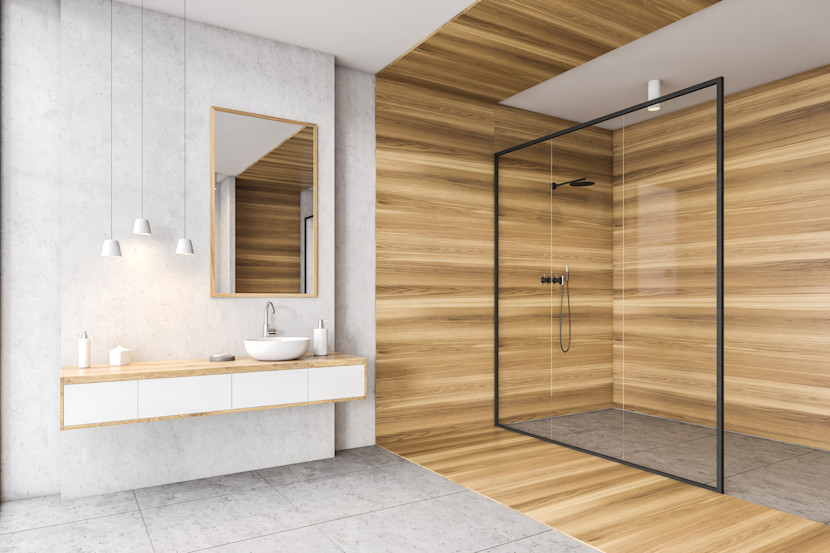
Curbless showers elevate a bathroom’s look and are also accessible.
Wall ovens are a kitchen upgrade, but homeowners may find them easier to use when turning or weight bearing.
Easily accessible, built-in storage solutions, ideally with pull outs are a value add, as well as accessible.
Front-load washers and dryers are easier to use.
When designing a kitchen, include countertops at varying levels, to accommodate sitting or standing for prep.
Extending Accessibility Outdoors
Creating useful, beautiful, and safe outdoor space is an important part of a home that supports aging in place.
When looking at homes or lots to build on be sure to look outside the four walls of the house itself and check out the topography of the site, to make sure it is suitable for aging in place. Are there slopes or other uneven ground that might be dangerous and/or hard to navigate?

Create a garden using zones. Place areas you are likely to visit most often closest to your home, so are more easily accessible if mobility issues arise. Make sure to incorporate resting spots with seating in your design.
Add railings where necessary, especially around decking or raised areas.
Ensure at least one entrance to your home is accessible without stairs (i.e. a ramp).
Make sure any landscaping has proper drainage, as standing water can create slipping hazards.
When designing your outdoor spaces, make sure to include wide pathways, easier to wander with a walker or wheelchair.
Use non-slip materials (some stones become very slippery when wet).
Ensure plants and vegetation are easy to care for, and that they don’t become overgrown, as this can create additional hazards.
Include shade structures in your landscaping plan, as you may be more susceptible to heat as you age.

Heather Wright
Heather Wright is a journalist with a background in real estate reporting and home design, décor and architecture. A design enthusiast and trend spotter, her work has appeared in various lifestyle publications across North America, with a focus on emerging trends and tech in design, sustainability, home renovations and new home construction. In addition to lifestyle writing, Heather's portfolio extends to personal and corporate finance and mining and resources.