
The Cottage home is beloved by homeowners, because of its quaint, charming and cozy appeal. With detailed, whimsical facades that conjure images of fairytales, the Cottage-style home’s sensible, compact design offers a number of practical benefits too.
Architecturally, the tight footprint is appealing to homeowners looking to downsize, as well as to homeowners who are trying to make more sustainable choices, including with their home design.
This housing style has endured for generations, in part because of the efficiency of its design, but also the way in which it creates comfort for those who live there.
What is a Cottage home? Here is a guide to the design elements and features that combine to create this timeless home style, whether your cottage is located at the foot of the enchanted woods, or right in the city.
What is a Cottage Home?
The Cottage-style house has roots that extend back to the Middle Ages, but the design that most homeowners are familiar with and aspire to replicate, is inspired by traditional English cottages that dot the countryside, made popular during the 19th century.
While you’ll find Cottage style houses in various locations across the United States, they appear most commonly along the Gulf Coast and the Eastern Seaboard.
The Cottage home has different variations, including the iconic Cape Cod style house, although the Cape Cod reflects a symmetrical design, while a true Cottage-style house does not.
Design Features of a Cottage Home
Small Size
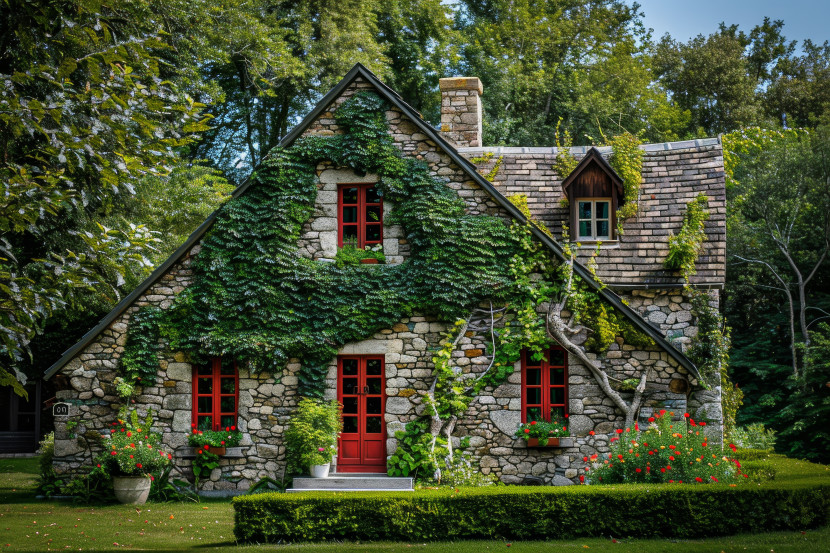
The most distinguishable feature of the Cottage home is its size. It is compact, rarely reaching over 2000 square feet and is usually much smaller than that.
Distinct Floor Plan
Traditional cottages are rectangular and boxy. Given the smaller footprint, layouts are strategic, so as to make use of every inch available.
Floor plans are typically open concept with much of the square footage dedicated to the main living spaces, with smaller bedrooms.
It’s common to have features such as a built-in breakfast nook, or a den/reading room, both of which are tailor-made for creating a snug ambience. What’s cozier than curling up with a cup of tea in the kitchen nook, or settling in with a good book in your reading room?
Also, the smaller layout supports the lifestyle principle that drives Cottage-style design, which is simpler living. The idea is that less house equals less time spent with cleaning and maintenance, leaving homeowners free to pursue passions and activities that bring joy.
Cottage Roof Style
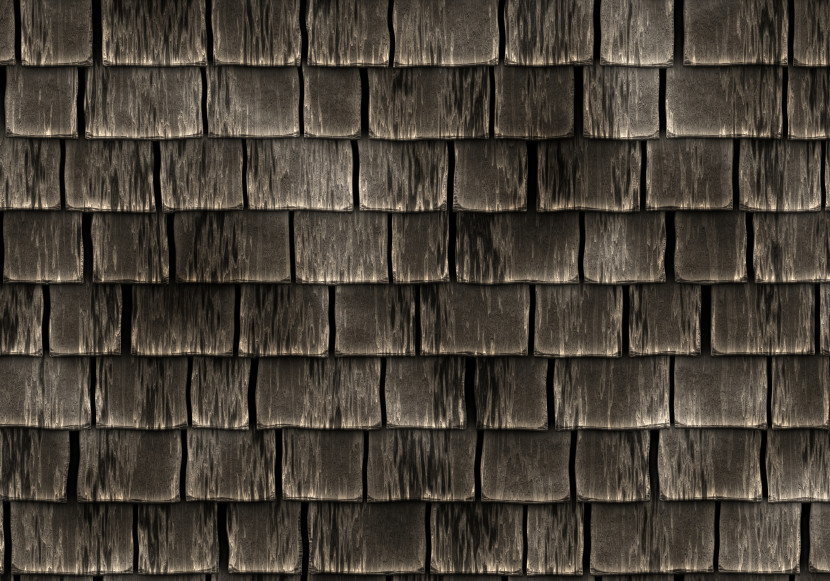
One of the hallmarks of a Cottage house is a gabled roof. Traditionally, a Cottage home has a thatched roof, resembling those that appear in the English countryside, but more common in the United States are cedar shake tiled roofs.
Roofs are steeply pitched, which adds aesthetic flair, but has functional origins. In the cool, damp British climate, where the design originated, the angle of the roof wicks away moisture from the home. In cooler areas, the slope of the roof presents ice damming.
Asymmetrical Design
One of the notable features is the asymmetrical design on a cottage’s facade. The front door might be offset. Windows are often different shapes, and may be clustered, rather than being evenly spaced. There is typically a tall chimney as well.
Intentional Landscaping
A Cottage house is often on a large plot of land that allows space for a meticulously tended front and rear grassy area. Bright flower beds, climbing plants that creep up the walls, hedges, a stone path leading to the front entryway.
The intention is to replicate an English garden, which is known for lush, colorful plantings.
What is Cottage Home Interior Decor?
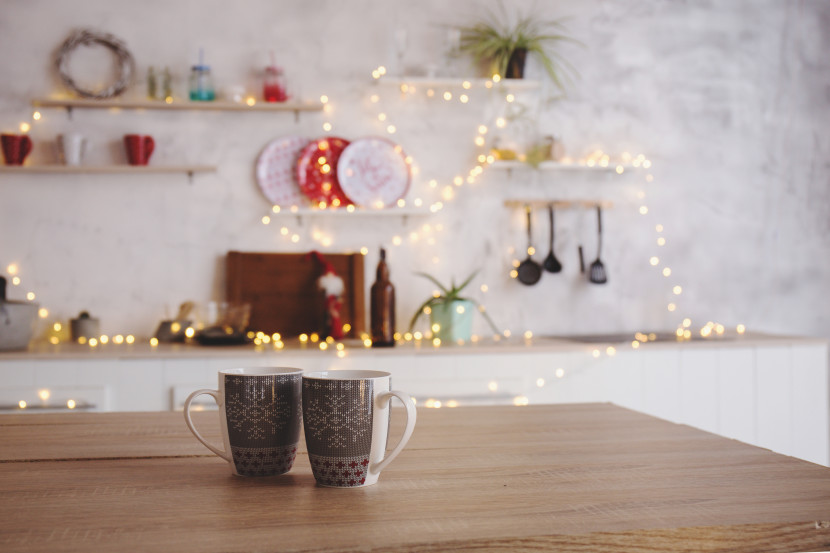
Comfort is the cornerstone of Cottage-style interior design, aesthetically and physically.
In the original Cottage style , the fireplace had to be centrally located for heating. In today’s iteration, a fireplace still remains central, but as a focal point and to set the aesthetic tone instead of for functional reasons. A popular material choice is natural stone.
Wood is prominent, as it is with other similar styles, such as the Farmhouse style. Although what sets the Cottage style apart is lots of wood trim features, such as beadboard, wainscotting and paneling.
Furniture and decor are not matchy-matchy but are curated and often look intentionally well-worn. Vintage pieces are a staple, especially antiques and warm woods, such as pine and oak. A popular choice in the Cottage home is painted furniture.
Color palettes are light and airy, typically composed of pastels or shades of white.
Texture is an important part of the aesthetic, and upholstery and other textiles layer for warmth visually. Common are velvet, linen, Chinz and embroidered pieces.
Open shelving acts as a display case for quirky, eclectic accents, such as knick knacks and mismatched china.
Cabinetry, particularly in the kitchen, might be painted in cheery colors.
Because these homes are small, it’s easy for them to feel cluttered. It's a good idea to maintain order with creative storage options.
The goal is warm and cozy, not dingy and cramped, which sometimes can happen with smaller homes. Ensure that lighting is layered, including task, accent and ambient lighting. Keep windows free of heavy drapes so that natural light and air can easily permeate the home.
How a Cottage-Style House Helps with Sustainability
A growing priority for homeowners is living sustainably, and a Cottage-style house is supportive of that goal.
With a compact, efficient design, the small size of a Cottage home reduces your carbon footprint, especially compared to some other, larger housing types.
A Cottage home has a smaller building envelope, so less materials are required for building. Less energy is required to heat and cool the home, reducing your carbon footprint further, with the added benefit of saving money on energy bills.
There are some additional ways to make a Cottage-style home even more eco-friendly.
Make the building envelope as tight as possible. Upgrade insulation and install triple-pane windows with glazing to minimize heat transfer.
A key design element of the Cottage is its lush landscaping. To be most eco-friendly, choose native plantings.
Choose sustainable materials for decor choices, such as bamboo, wood, cork and low-VOC paints.
Although the aesthetic is rustic, implement modern smart tech, with appliances, thermostat, and plumbing fixtures to reduce energy and water waste.
Can you Have a Cottage Home in the City?
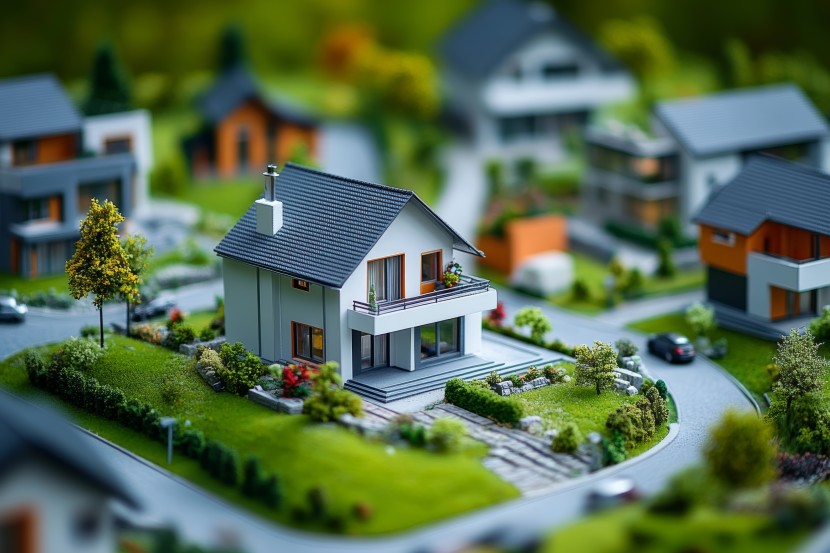
Cottage-style homes are well-suited for city living in theory, because their small footprint means that they can be built easily on a small piece of land, like you typically find in urban or high-density suburban areas.
If your location isn’t cottage country, you can still create Cottage home vibes with these tips:
Embrace Asymmetrical Design
Whether it is offsetting your front door, or having windows placed in clusters, rather than evenly spaced, using an asymmetrical approach to your home’s exterior adds the whimsy that is a key part of Cottage style.
Focus on Landscaping
Landscaping your home with an English garden theme- colorful blooms, stone pathways, archways or arbors, benches, fountains, a creeping vine up the front or a trellis will add Cottage style.
Bring in Cottagecore
Cottagecore is one of the hottest interior design trends and adopting principles of this aesthetic will lend to the Cottage vibe.
Choose handcrafted or vintage decor, especially knits, embroidery and florals.
Embrace pastimes that evoke comfort and self-sufficiency, two of the overarching goals of Cottagecore, and create spaces to support them, such as sewing, baking and gardening.
Include plants and greenery, along with dried flowers in your interior decor.
Blend meaningful family heirlooms with more modern pieces.
Adorn open shelving with old-fashioned teacups or kitchen tools and hand-made candles.
For more design inspiration, follow NewHomeSource on Instagram.

Heather Wright
Heather Wright is a journalist with a background in real estate reporting and home design, décor and architecture. A design enthusiast and trend spotter, her work has appeared in various lifestyle publications across North America, with a focus on emerging trends and tech in design, sustainability, home renovations and new home construction. In addition to lifestyle writing, Heather's portfolio extends to personal and corporate finance and mining and resources.