
Mortgage rates climbing above 7% have eroded would-be buyers’ purchasing power, leaving many hesitant to make a move. When higher rates drive monthly payments up, waiting can feel like the safest financial move, but not every home shopper has the freedom to wait until the timing is "right" to purchase a home. “Life happens” events such as relocations and growing families can't be timed to the economy, but affordability is an unavoidable consideration when it comes to buying a home.
For people looking to purchase a home but are watching their budgets, new construction can be a more affordable option than they might expect. With prices for new and existing homes converging, a newly built home can actually offer substantial monthly savings, particularly when builder incentives are available. Here's how the numbers break down, and what potential buyers need to know.
Mortgage rates erode purchasing power, leaving buyers on the sidelines.
As recently as 2021, the typical household could afford more home than the market was asking. Income-supported home prices, meaning what a median-income household can comfortably carry, sat above market prices for both new and existing homes.
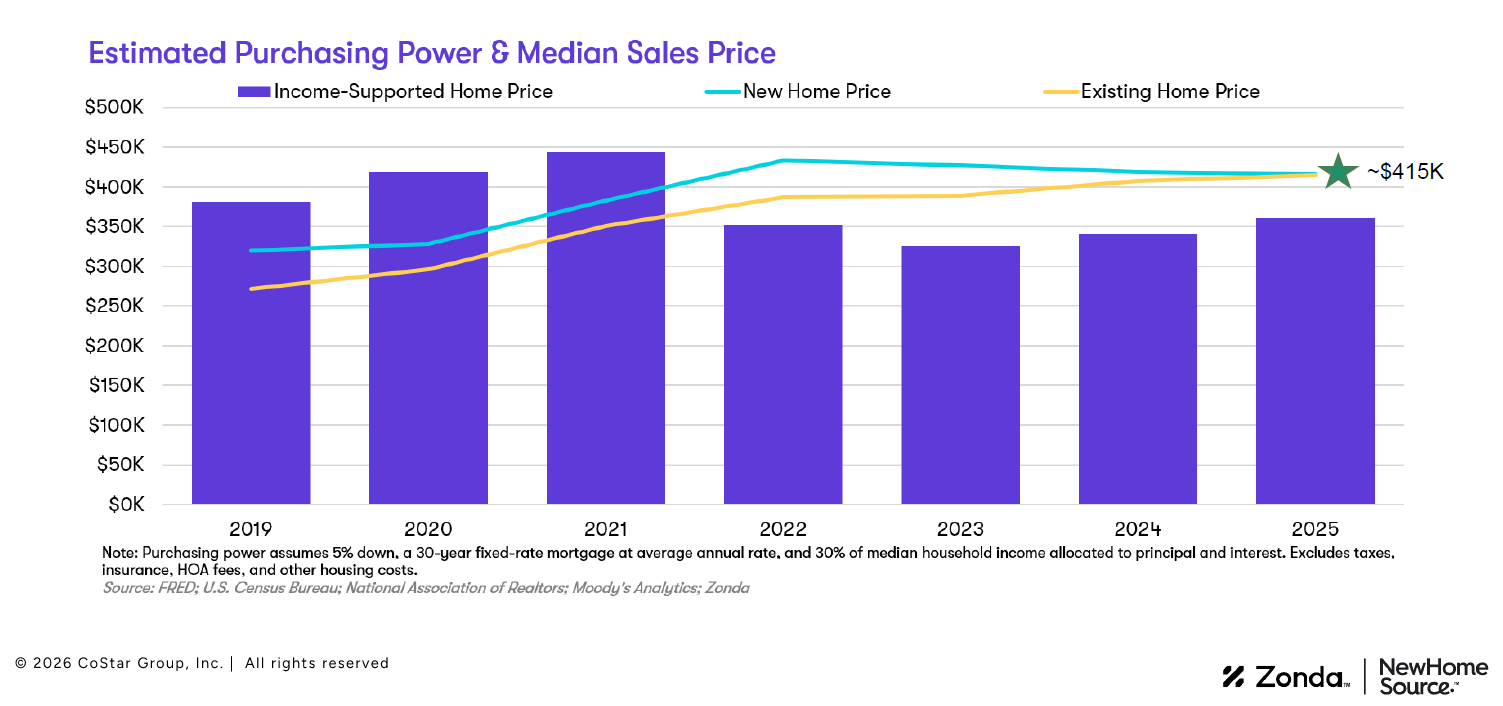
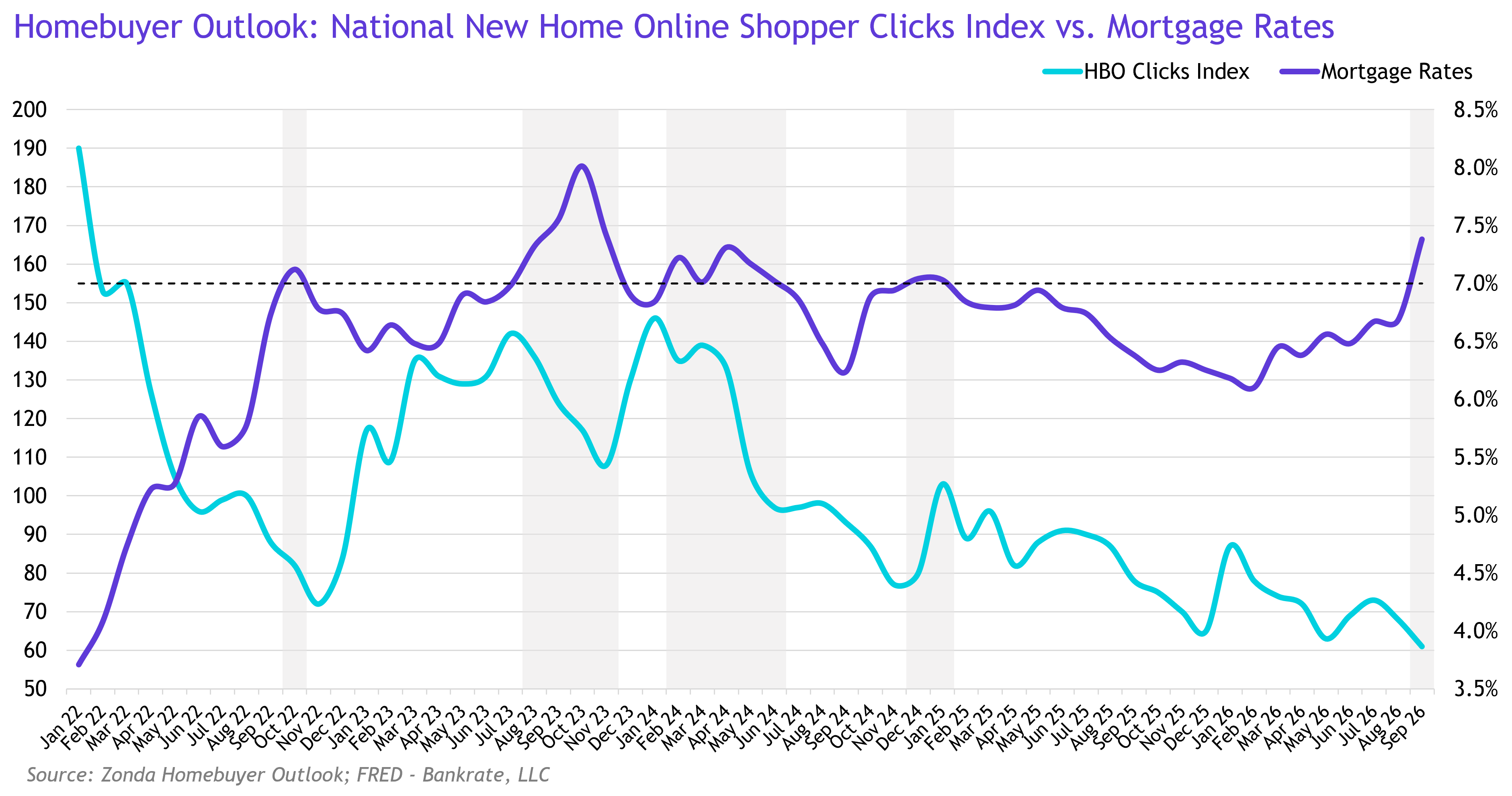
Higher mortgage rates closed that gap. Home prices have since climbed past the income-supported level, so the same paycheck now buys less house. And buyers feel it: NewHomeSource data shows a distinct drop in shopper activity when rates move above the 7% mark.
“Affordability is the defining challenge for today’s home buyers,” says Nicollette Chapman, personal finance expert at NewHomeSource. “Higher prices and borrowing costs mean the same paycheck doesn’t stretch as far as it did just a few years ago, leaving home shoppers recalculating what they can afford, and looking for ways to trim their monthly budgets.”
Builder incentives ease cost burdens.
The price difference between a new home and an existing home has all but disappeared, increasing options for home shoppers. But builders have more tools to help buyers navigate affordability challenges than resale home sellers, and they’re broadly available. In September, 63% of new-home communities offered incentives on homes that are yet to be built, and that share rose to 82% for quick move-in homes, according to the Zonda New Home Market Update.
Incentives can be shaped around what a buyer needs most. For example, the most common incentive strategy from builders is closing cost credits, offered by 85% of builders, according to a Zonda survey, helping buyers who are short on cash for closing. The next most common incentive is a permanent rate buydown that lowers a buyer’s monthly payments for the duration of their loan, offered by 67% of builders, a welcome relief in today’s high-rate environment.
“Builders have a deeper toolbox than the typical resale seller,” according to Chapman. “Closing cost assistance can ease the upfront hurdle, while a permanent rate buydown lowers the payment for the life of the loan. For buyers stretched by today’s rates, the right tool can turn a home that felt out of reach into one that fits the budget.”
Newer homes have lower maintenance costs.
Fannie Mae suggests setting aside 1% to 4% of a home's value each year for upkeep. Newer homes sit closer to 1%, while homes 30 years or older sit closer to 4%. The median U.S. home was built in 1981, putting it well over that 30-year mark. Beyond structural maintenance like roofs, systems like HVAC units and water heaters often reach the end of their expected life in less than 30 years, and if upkeep has been put off, the bill will land on the next owner. With a new home, many of these major maintenance and replacement costs are years or decades away.
Doing the Math
To put the cost differences in perspective, compare two $415,000 homes, one newly built and one built in 1981 that may have more maintenance needs. Both have a 5% down payment. The existing home has a 30-year fixed-rate mortgage rate of 7.11%, the current rate according to Freddie Mac as of Nov. 12, while the new home includes a 2-point mortgage rate buydown from the builder, so is financed at 5.11%. These calculations do not account for property taxes, homeowners insurance, or other costs that buyers will need to pay.
| New home | Existing home | |
| Monthly mortgage payment | $2,347 | $2,856 |
| Annual mortgage cost | $28,164 | $34,272 |
| Annual recommended maintenance budget | $4,150 (saving 1%) | $16,600 (saving 4%) |
| Total annual cost | $32,314 | $50,872 |


