
Over the past several years, the typical age of residents across most major housing markets has edged higher. Between 2019 and 2024, the median age in many metros rose by about one year. While that may seem modest, it signals a steady change that influences what kinds of homes are being built and how communities are designed.
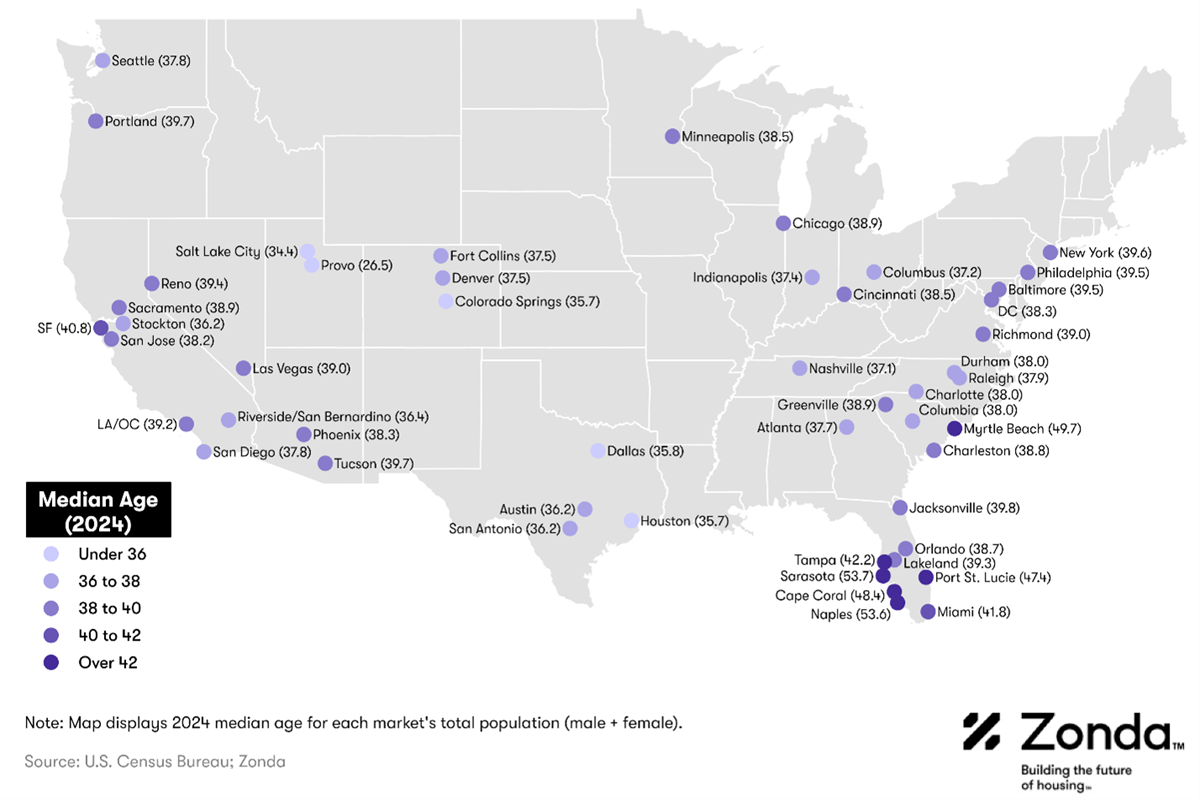
In large coastal and Midwest cities, median ages now generally fall in the upper 30s to low 40s. Places like Seattle, Chicago, Minneapolis, and Philadelphia have all aged slightly as millennials move deeper into adulthood and fewer younger households move in. In higher cost markets such as San Francisco, the median age has climbed past 40. For buyers, these trends often show up in neighborhoods that prioritize comfort, efficiency, and long-term livability over rapid turnover.
Where Younger Buyers Still Lead the Way
Despite the national aging trend, some markets remain noticeably younger. Provo continues to stand out with one of the youngest median ages in the country, still in the mid 20s. Salt Lake City also skews young, along with several Texas metros including Dallas, Houston, San Antonio, and Austin, where median ages remain in the mid 30s.
These younger markets often feel different on the ground. They tend to support more first-time buyers, growing families, and active household formation. Even though residents there are aging as well, strong job growth, in migration, and relative affordability help keep these areas appealing for buyers looking to put down roots earlier in life.
Retirement and Lifestyle Markets Skew Older
At the other end of the spectrum are markets that attract retirees and second-home buyers. Many Florida cities, along with destinations like Myrtle Beach, report median ages well into the late 40s and 50s. These areas often appeal to buyers who are downsizing or prioritizing lifestyle features such as low maintenance living, walkability, and shared amenities.
Some of these traditionally older markets are beginning to see a bit more age diversity, driven by remote work and cost of living differences. Even so, their overall character remains shaped by older households, which influences everything from home design to the pace of daily life.
What Median Age Can Tell You as a Buyer
Median age is more than a number. It offers insight into what living in a particular market might feel like. Older markets often feature quieter neighborhoods, smaller households, and homes designed for convenience and ease. Younger markets may feel more energetic, with busier schools, larger households, and a wider mix of price points and home styles.
Choosing a Market That Fits Your Life
There is no single demographic story shaping housing today. Some markets are aging quickly, others remain young, and many fall somewhere in between. Understanding who lives in a market and how that population is changing can help you choose a home that supports not just your budget, but your lifestyle for years to come.

