

When most people think about large universities, they picture student apartments and rental demand. But if you are searching for a home, these institutions can offer something even more valuable: a steady and reliable housing market that supports long-term value and lifestyle flexibility.
It starts with sheer size. Schools like Ohio State, the University of Central Florida, Texas A and M, and Arizona State each enroll tens of thousands of students. These campuses function almost like small cities, bringing in not just students, but a wide range of professionals. From professors and researchers to healthcare workers and administrative staff, universities create a built-in community of people who live and work nearby.
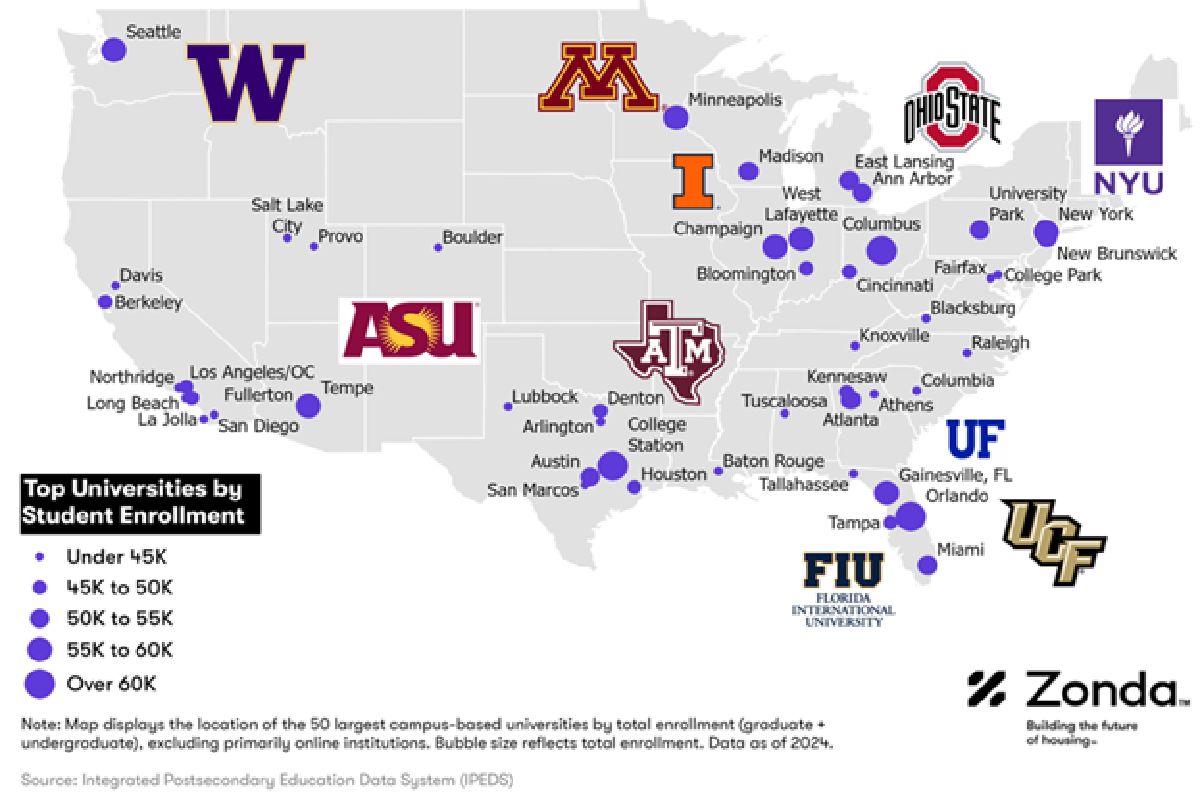
That steady flow of employees matters for homebuyers. Unlike markets that rise and fall with a single industry, university-driven economies tend to be consistent. People who work at these institutions often settle in for the long haul, which helps maintain demand for homes year after year. For buyers, that stability can translate into more predictable home values and less dramatic market swings.
In some cities, the benefits go even further. Universities often sit at the center of growing job hubs. In places like Austin and Seattle, strong ties between universities and industries such as technology help keep graduates in the area after they finish school. That means more young professionals entering the workforce and eventually stepping into homeownership. For families and first-time buyers, this creates a vibrant, growing community filled with opportunity.
Another advantage is how housing demand spreads across a metro area. While students tend to cluster near campus, homeowners usually look a bit farther out. Nearby suburbs and neighborhoods often attract university employees who want more space, better schools, and a quieter lifestyle. For buyers, this opens up a wider range of options, whether you are looking for a starter home or planning your next move-up purchase.
Universities also help support a wide range of price points. Large research institutions bring in funding, partnerships, and higher-paying jobs, which contributes to a diverse local economy. This makes it easier to find housing that fits different budgets without sacrificing access to jobs, amenities, and community resources.
Perhaps the biggest benefit is long-term confidence. “Universities rarely relocate, and many continue to grow over time,” said Ali Wolf, chief economist for NewHomeSource. “That ongoing presence helps anchor the local housing market, even during periods of economic uncertainty.” For buyers thinking about where to put down roots, that kind of stability can be just as important as the home itself.
If you are exploring your options, it may be worth taking a closer look at communities near major universities. You might find more than just a convenient location, you could discover a market built for long-term living and lasting value.


