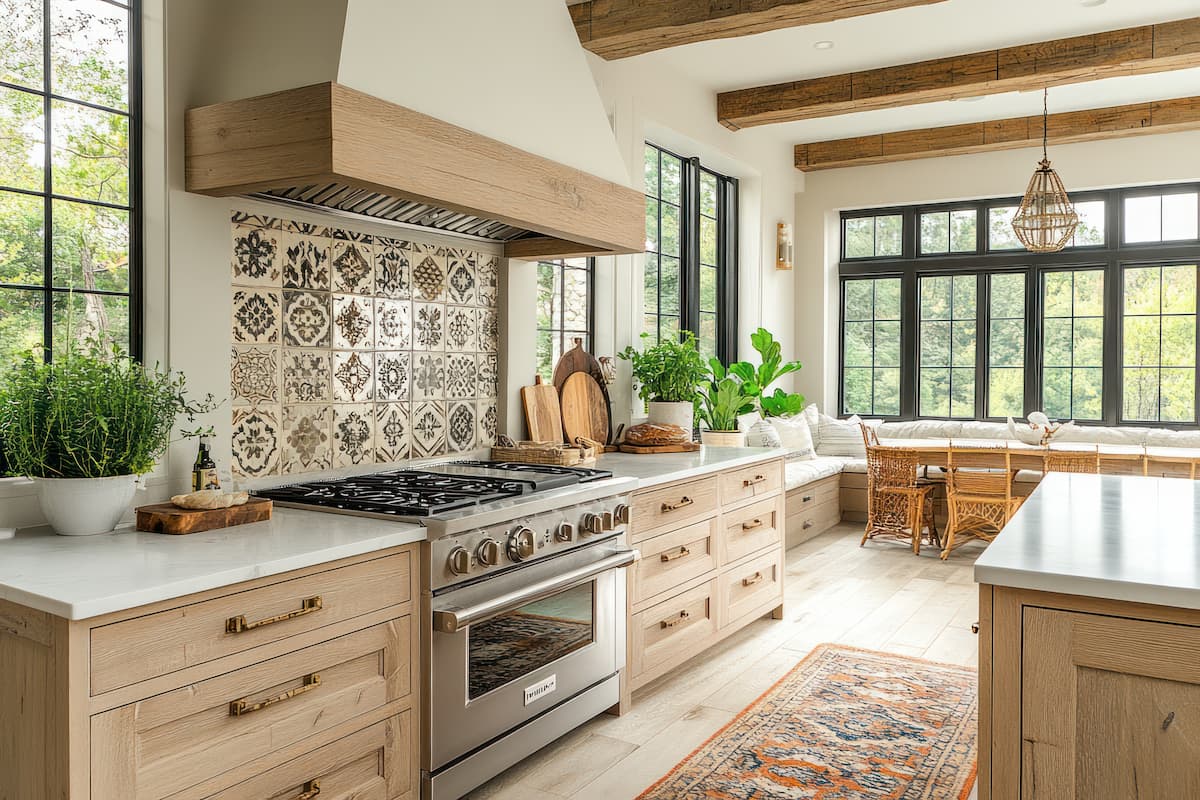

Design choices carry more weight for new-build homeowners in 2026, with affordability, the ability to personalize, and lifestyle-focused functionality among key priorities.
Here are some of the top interior design trends that will shape new builds and inspire homeowners in 2026.
Kitchen Design Gets Personal
New-build floor plans are trending smaller, yet kitchens are getting bigger, reflecting their role as a space where homeowners want to gather. As a result, the kitchen is emerging as a key location to express personal style. This is part of a larger trend, where kitchen design is shifting from utilitarian to cozy living space.
Kitchen islands are stepping into the spotlight. In 2026, they are bigger, multi-purpose, and statement-making with fluting, textural options, and sculptural designs.
Kitchens are increasingly showcasing treasured artwork and statement stone, according to Gladys Schanstra, owner/creative director of Drury Design.
“Homeowners are incorporating artwork, meaningful pieces, and mementos in the kitchen or seating areas. The kitchen is becoming much more personalized than ever before.”
The need for wall space for display is affecting cabinetry design. Schanstra says base cabinets and in-island cabinetry are being reconfigured to organize plates, glasses, pots, and pans, leaving uppers open.
For new construction buyers, this trend matters because you can expect to see many of these layout and cabinetry choices becoming standard options, while statement islands or specialty stone are likely to be upgrade-driven.
Health and Wellness Influences Self-Care in Bathrooms, Shapes Outdoor Design
Health and wellness were among the most influential new-build trends in 2025, particularly in kitchen design. In 2026, the wider availability of wellness products is transforming primary bathrooms into self-care destinations.
According to the National Kitchen and Bath Association (NKBA) 2026 Bath Trends Report, 77% of homeowners are seeking sanctuary in their primary bathrooms and are drawing escapist inspiration from hotels and resort designs.
Saunas are trending, especially in primary baths, as homeowners embrace the well-known health benefits. Saunas are becoming more affordable and adaptable to different spaces.
“Modern sauna designs are compact, modular, and customizable, enabling homeowners to bring a luxury sauna experience into spaces that previously wouldn’t have worked,” says Emily Stubler, marketing director, Kohler Wellness Products, noting that Kohler is launching the first expandable/retractable sauna in the United States this year, designed for space-conscious consumers.
Bathtubs made a comeback in new builds last year as a self-care tool, the trend is set to continue in 2026. While freestanding, sculptural tubs were hot last year, industry experts expect built-in bathtubs to gain traction now, thanks to growing priorities for practical, timeless design.
Other trending bathroom features that support self-care include steam showers, rainfall showerheads, aromatherapy, chromotherapy, and heated floors.
Meanwhile, homeowners are taking health and wellness features outside.
“Consumers are investing in outdoor showers, saunas, outdoor workout rooms, and cold plunges to create wellness spaces outside, and in their garages,” says Lee Crowder, senior director, national design and model operations for Taylor Morrison
For buyers, wellness-driven design matters not just for your health, but because many of these features can add long-term value. Some are becoming more common, particularly in higher-end homes, while others remain premium upgrades.
Color Trends: Neutrals Shift, Affordability Drives Color Choices
With affordability top of mind for homeowners, color trends reflect a sensible approach to style: timeless choices that are grounding but leave room for self-expression.
Notably, the concept of neutrals has shifted from one-dimensional whites, grays, and beiges to earthy hues that add depth and warmth. Look for various shades of green, blue, pink, terracotta, and warm red to serve as base neutrals in 2026.
At the same time, homeowners are leaning towards timeless paint colors because longevity is the affordable choice. Color trends in 2026 give space for homeowners to be practical while still adding personality.
“Compared to 2025, which focused on warming up spaces and personalizing builder neutrals, 2026 is about refinement and confidence: knowing which colors will stand the test of time and support everyday living,” says Sue Wadden, director of color marketing at Sherwin-Williams. “Affordability absolutely plays a role in that mindset.”
For buyers, these color shifts matter because choosing durable, flexible palettes can reduce the need for future repainting. Many builders are expanding their standard paint color offerings, while bolder tones may be available as design center upgrades.
Top Decor Styles for New-Build Personalization
Homeowners are placing greater value on personalizing new builds, and these styles will be influential this year.
Warm minimalism. Experts predict that this aesthetic will lead trends in 2026, especially in new build kitchen design, with natural wood tones, soft, natural textures, layered looks, and uncluttered, clean lines.
Art Deco saw a revival in 2025. It’s fun, expressive, colorful, and joy-centric, qualities that still resonate with homeowners, so experts expect to see more of this trend.
Ralph Lauren-inspired style and equestrian elegance. The look, which focuses on rich woods, plaids, leathers, and vintage decor, lends itself to layering, which is an easy way to personalize and add warmth to a new build. The aesthetic was already taking shape in design studios in 2025, says Crowder. “We saw wallpaper more frequently with lots of plaids, toiles, and the trending Ralph Lauren vibe, popular with our consumers today.”
Understanding which styles are foundational versus expressive helps guide budget decisions.
Color Capping, Material Drenching Replace Color Drenching
Color drenching, where everything in a room is enveloped in a single color, has been popular over the last few years. The trend is evolving in 2026, from full drench to color capping, a paint technique that relies on tonal variations of a color within the same color family in a gradient pattern, adding depth and naturally drawing the eye upward.
Color capping will be of interest to new-build homeowners because it accentuates ceiling height, and many new builds feature high ceilings as a standard feature. High ceilings and intentional decor can amplify the sense of space, an important consideration in townhomes, smaller homes, and in open-concept floor plans.
Meanwhile, material drenching is expected to be big in 2026, especially in bathrooms, where tiles and natural stone are extending beyond the shower to wrap the room. It’s a luxurious, textural look that homeowners are after this year.
While paint techniques can be applied at any time, full material drenching typically represents a higher-end design choice best planned during construction rather than after move-in.
Integrated and Hidden Features
New builds are going clutter-free with clean lines in 2026, thanks to concealed storage and functional, flexible features tied to warm minimalism, flex rooms, and open-concept living.
Look for integrated tech, such as built-in chargers in vanities, kitchen islands, countertops, and drawers.
In the kitchen, expect to see flat-panel appliances, pocket-door cabinets, lighting, and smart tech built into millwork, sliding backsplash for storage, pop-up range hoods, and butler pantries or messy kitchens tucked out of view.
Pop-up TVs are trending, hidden behind cabinets, in furniture, walls, or counters, or even in the floor. Expect to see this innovation across the entire home, including outdoors.
For buyers, integrated features matter because they reduce visual clutter without sacrificing function.
The Bottom Line
In 2026, interior design trends for new builds are less about chasing aesthetics and more about balancing personalization, affordability, and long-term livability. Homeowners want spaces that feel expressive yet timeless, functional yet flexible.
For new-build buyers, understanding which trends are foundational versus optional can help guide smarter design-center decisions—allowing them to invest where it matters most while keeping budgets in check as homes continue to evolve with their lifestyles.
For more new home design and decor inspiration, follow us on Instagram or sign up for our newsletter.


