

With job growth cooling and fewer people moving to the U.S. from abroad, the biggest driver of housing demand today is simpler and more personal: Americans relocating within the country for affordability, lifestyle, and long-term stability.
Across the nation, these moves are reshaping which markets feel competitive, which are normalizing, and which may be entering a new chapter altogether.
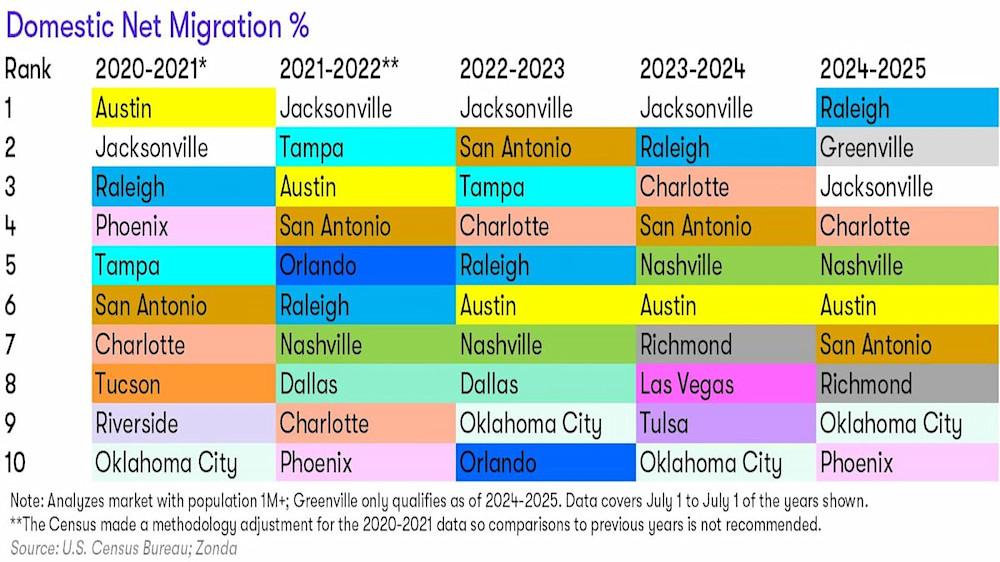
Key Takeaways from the U.S. Census Bureau data (looking at markets with a population of one million+):
One of the biggest stories this year is the rise of Raleigh, North Carolina. The metro area now sits at the top of the domestic migration rankings, signaling strong and steady interest from new residents. Raleigh’s appeal comes from a healthy job market, without the extreme home prices seen in some larger innovation hubs. This balance has helped Raleigh stand out as a place where growth feels sustainable.
Not far behind is Greenville, South Carolina, which has quietly crossed an important milestone. The area surpassed one million residents in 2025 and immediately emerged as a top destination. For buyers, Greenville’s story is a reminder that smaller and mid-sized markets can offer strong housing options well before they become household names. These areas often provide more approachable home prices, less congestion, and a sense of community that appeals to families looking to plant roots.
At the same time, some once red-hot markets are taking a breather. Places like Las Vegas have slipped in the rankings as higher prices and increased supply have slowed momentum. This kind of correction is not necessarily a bad thing for buyers. In fact, it can create breathing room, with more choices and less urgency than in previous years. These shifts highlight why timing and local conditions matter just as much as national headlines.
Another important theme emerging from the data is that growth is slowing almost everywhere. Even the fastest growing markets today are expanding at a more measured pace than they did earlier in the decade.
One market showing how momentum can return is Phoenix. After cooling off in recent years, Phoenix is once again attracting new residents. A combination of relative affordability, steady job growth, and long-standing lifestyle appeal has helped the market find its footing again. For families watching from the sidelines, Phoenix illustrates how large metro areas can reset and reemerge when prices and inventory come back into alignment.
Ali Wolf, chief economist for NewHomeSource summed it up, “these migration trends point to a housing market that is no longer about chasing the fastest growth, but about finding places that can grow without stretching affordability too far.”
