

If you have been watching home prices and mortgage rates and wondering why buying still feels out of reach, you are not imagining it. Across much of the country, owning a home continues to cost significantly more per month than renting, especially in larger metro areas. While the national picture has improved slightly, the real story shows up at the local level, where affordability can look dramatically different from one city to the next.
In many major markets, monthly mortgage payments on a typical home are still far higher than the cost of renting a newer apartment. This difference, often called the homeownership premium, helps explain why many households are choosing to rent longer, even if buying remains a long-term goal. The gap has narrowed a bit in recent months, but in several cities, it remains wide enough to influence everyday decisions about where to live.
Regional Differences for Homebuyers
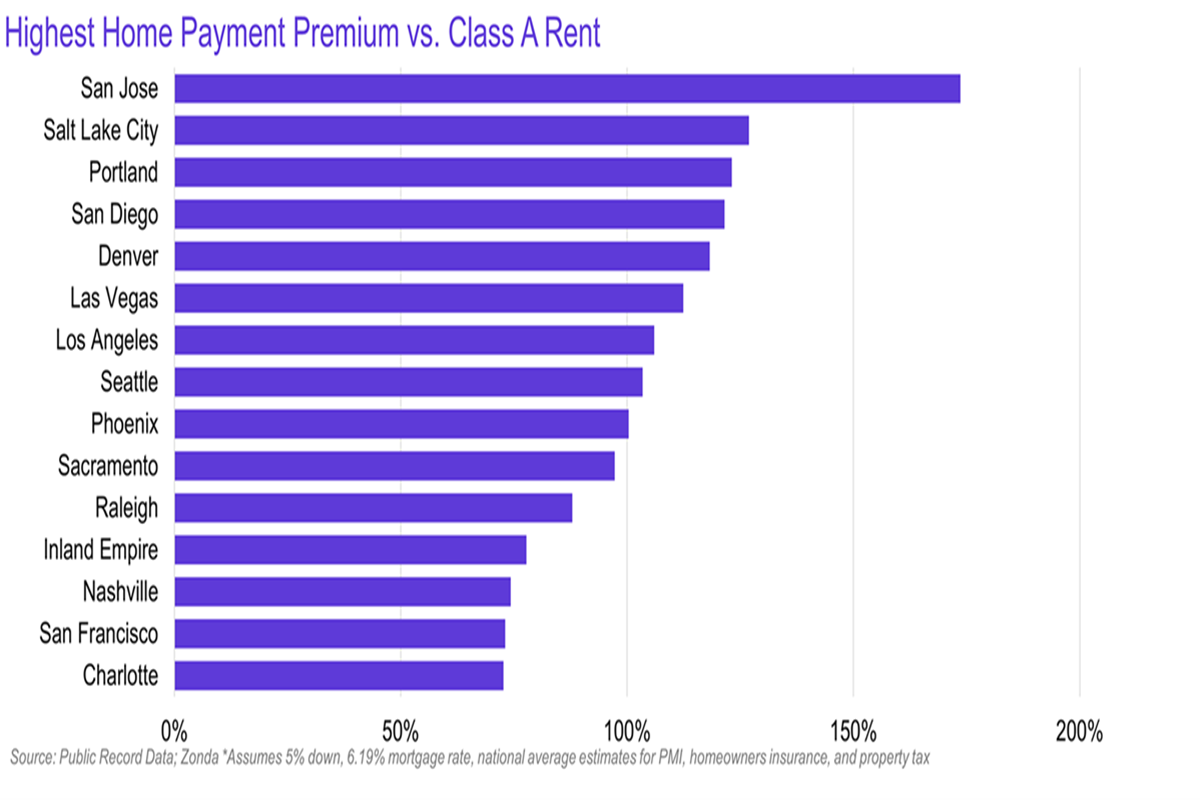
Nowhere is this more apparent than along the West Coast. High home prices continue to outweigh modest improvements in mortgage rates, pushing ownership costs far above rental costs. In markets like San Jose, the monthly cost of owning a home can be more than double the cost of renting a comparable apartment. Other cities such as San Diego, Portland, Denver, and Salt Lake City show similar patterns, where home prices rose quickly during years of strong population growth and have not meaningfully cooled.
For homebuyers, this creates a tough tradeoff. Renting often allows access to desirable neighborhoods, shorter commutes, and newer housing without stretching monthly budgets to uncomfortable levels. As a result, rental demand in these markets has remained surprisingly strong, even as new apartment buildings come online.
As the affordability story shifts from west to east, a different picture is emerging in parts of the Midwest. Cities like Pittsburgh, Cleveland, Chicago, and St. Louis show a much smaller gap between renting and owning. Lower home prices and slower appreciation have kept ownership costs closer to rental costs, making the transition from renter to homeowner feel more realistic for many households.
“These more balanced markets may offer opportunities for buyers who are flexible about location or who are entering the market for the first time,” says Ali Wolf, chief economist for NewHomeSource. “While no market is immune to affordability challenges, the Midwest highlights how local conditions can matter more than national averages when it comes to buying a home.”
What to Know as a Homebuyer
So, what does this mean if you are thinking about buying? First, it reinforces the importance of focusing on your specific metro area rather than headlines about the national market. Second, it suggests that timing and location are just as important as interest rates. In markets where renting and owning costs are closer, buyers may find more room to plan, save, and move forward with confidence.
As affordability continues to shape the housing market, understanding the rent versus own dynamic can help you set realistic expectations and make informed choices. Whether you decide to rent a little longer or start your home search now, knowing how your local market compares can be a powerful first step.


