

After decades of steady population growth, the United States is entering a slower phase. Population growth is slowing overall, which makes one trend matter more than ever for homebuyers: domestic migration. In simple terms, this is the movement of households from one metro area to another within the U.S. When growth slows nationally, these moves play a much bigger role in deciding which housing markets heat up and which ones cool down.
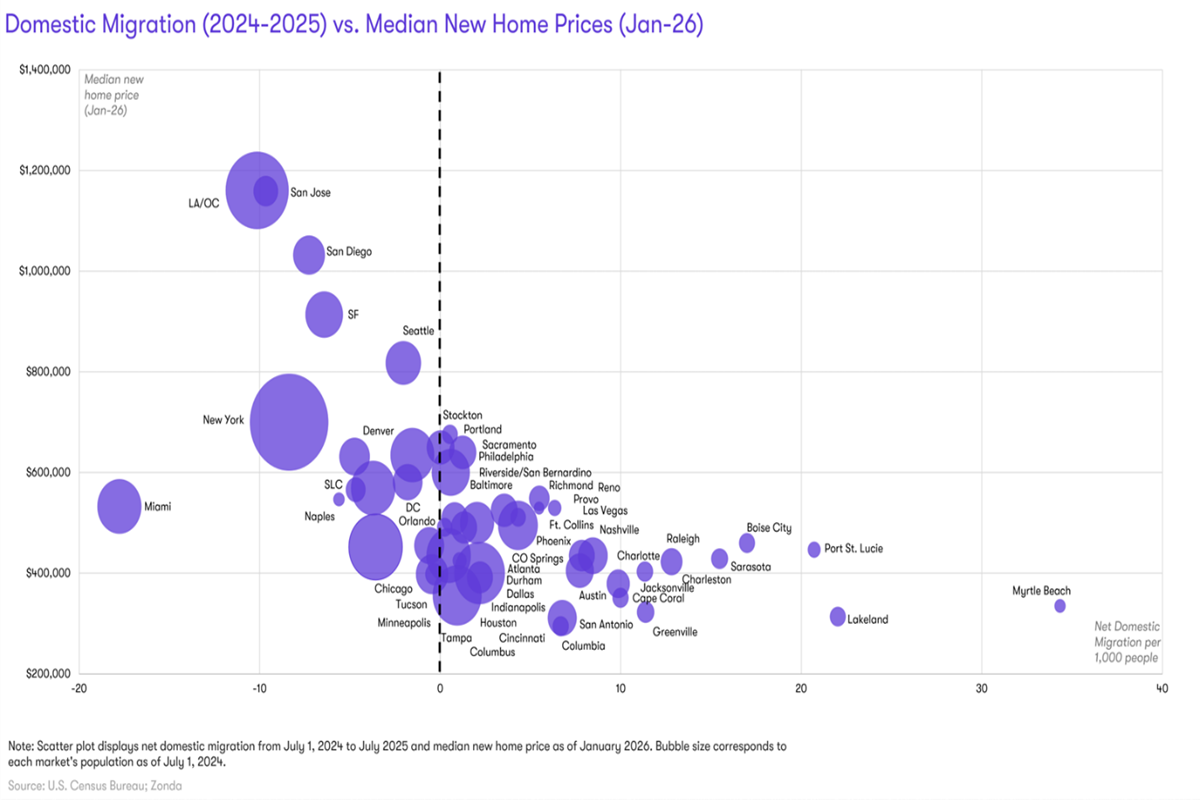
Recent data compares the latest domestic migration trends with new-home prices across major markets, and a clear story is emerging. Where people are moving often lines up closely with what they can afford, and that balance is becoming a defining factor for today’s buyers.
Why High Prices Are Pushing People Out
Some of the country’s best-known cities continue to see residents leave, and cost is a big reason why. Markets like Los Angeles, San Francisco, San Diego, Seattle, and New York all rank among the most expensive places to buy a new home, with prices often stretching from the high six figures into the millions.
These cities still offer strong job markets, culture, and opportunity, but for many households the math no longer works. High prices limit options, especially for first-time buyers and growing families. As a result, new-home purchases in these areas are increasingly made by higher income households rather than a broad mix of buyers.
For consumers, this helps explain why inventory can feel tight and prices stubbornly high in these metros, even as people quietly pack up and look elsewhere.
The Middle Ground Markets Holding Steady
In the middle of the picture sit many Midwest and interior cities such as Chicago, Minneapolis, and Columbus. These areas tend to see modest gains or near balance in domestic moves, paired with new-home prices that are generally more approachable, often in the $350,000 to $500,000 range.
These markets may not grab headlines, but they offer something many buyers value: stability. Job bases are often diverse, neighborhoods are established, and price swings tend to be less dramatic. For buyers who want predictability and fewer bidding wars, these steady markets can be appealing places to plant roots.
Where Migration and Affordability Come Together
On the other end of the spectrum are markets pulling in the most new residents while keeping prices relatively attainable. Places like Lakeland and Port St. Lucie in Florida, Myrtle Beach in South Carolina, and Boise in Idaho stand out.
These areas often combine lifestyle perks like warmer weather, outdoor amenities, or lower taxes with new-home prices that are closer to what middle income households can manage. For many buyers, moving from a high-cost metro to one of these markets can mean getting more space, newer homes, and a better overall fit for their budget.
What This Means for Home Shoppers
Understanding migration trends can give buyers a useful lens when weighing where to buy next. “Markets gaining residents often offer more long-term momentum, but only if prices align with local incomes,” cautions Ali Wolf, the chief economist for NewHomeSource. “Meanwhile, high-cost cities may require tradeoffs, whether that means smaller homes, longer commutes, or stretching budgets.”
As you search for a new home, paying attention to where people are moving and why can help you spot markets that balance opportunity, lifestyle, and affordability, both today and in the years ahead.


